
The Bones That Cannot Lie
A bone that speaks from the grave

SISTER LUCY TRUTH · VIDEO ANALYSIS · 2026

More than a dozen forensic specialists have now examined the photographic record of the woman presented to the world as Sister Lúcia dos Santos after 1967. Plastic surgeons. Forensic artists. Oral surgeons. Physicists. Biometric laboratories. They worked independently, in different countries, using different methodologies. Every one of them reached the same conclusion: the woman in those later photographs is not the same woman who appears in the photographs taken before 1967.
Sister Lucy Truth has published all of those reports. The evidence is there for anyone who wants to read it.
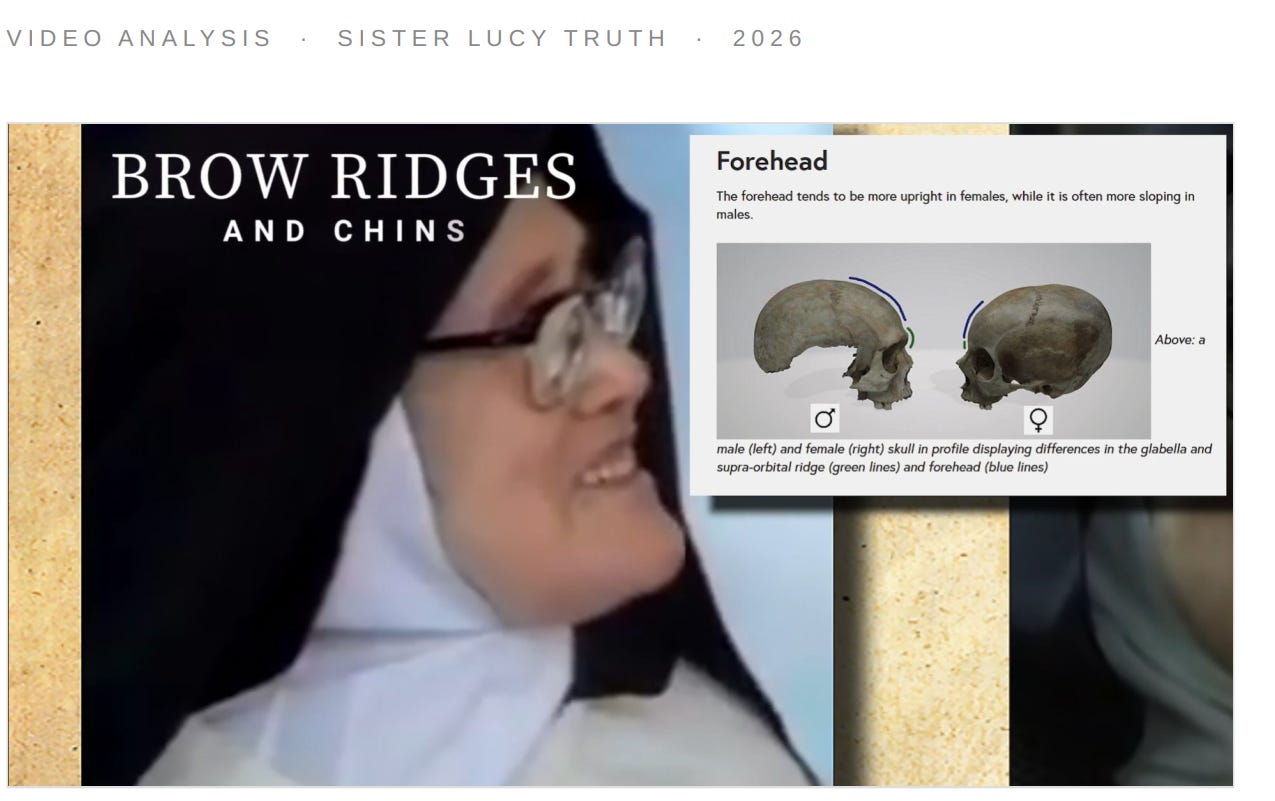
The short film Brow Ridges and Chins takes a completely different approach. It does not cite a single expert. It does not reference a single report. It asks you to look at two bones — a brow ridge and a chin — and decide for yourself.
* * *
The superciliary arch is the bony ridge that runs above the eye sockets. Most people call it the brow ridge. It forms during puberty under the influence of androgens, and once it is formed, it does not change. Not with age. Not with weight loss. Not with dental work or surgery. It is fixed in the skeleton for life.
In women, this ridge is typically modest — it follows the curve of the orbital rim closely, and the forehead above it rises at a relatively upright angle. In men, it projects forward as a distinct shelf, and the forehead behind it slopes backward rather than rising straight up. Forensic anthropologists use this difference routinely when they need to determine biological sex from skeletal remains. It is one of the most reliable indicators they have.
The chin works the same way. The forward projection of the chin — technically, the mental protuberance of the mandible — is determined by bone. Aging causes the jaw to lose density over time, which makes the chin slightly less prominent, not more. A chin that is modest at fifty does not develop a dramatic forward protrusion at eighty. That is not how bone works. That is not how aging works. The direction of change runs one way only.
* * *
The Forehead That Points the Wrong Way
The film opens with this anatomy laid out plainly, and then places it directly beside footage of the woman known to Sister Lucy Truth’s investigation as Lucy II — the individual who appeared publicly as Sister Lúcia after 1967.
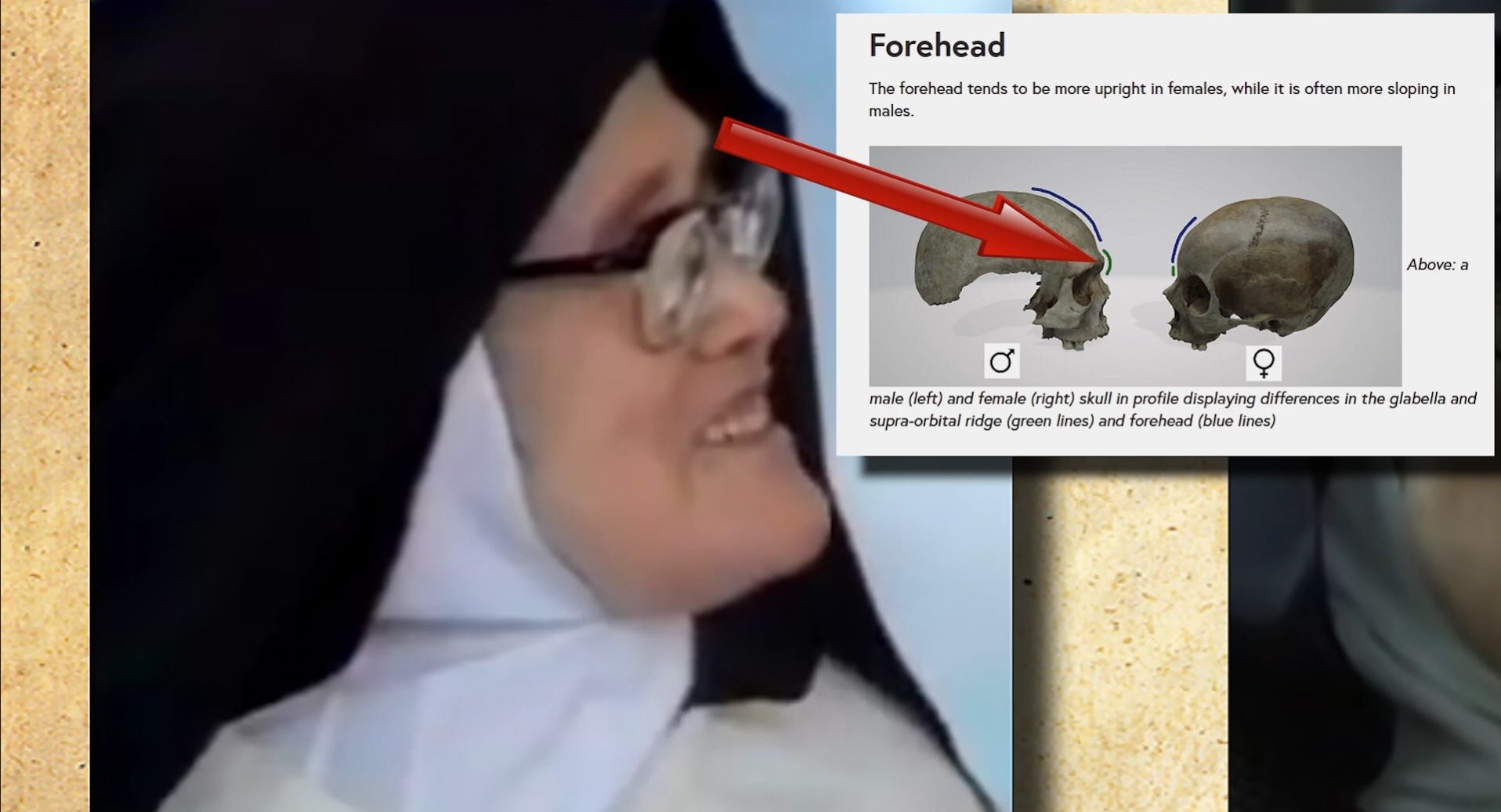
The forensic anatomy reference shown on screen carries a caption that is legible in the frame: “The forehead tends to be more upright in females, while it is often more sloping in males.” Two skulls appear beside that text. One male, one female. The difference in their forehead angles is not subtle.
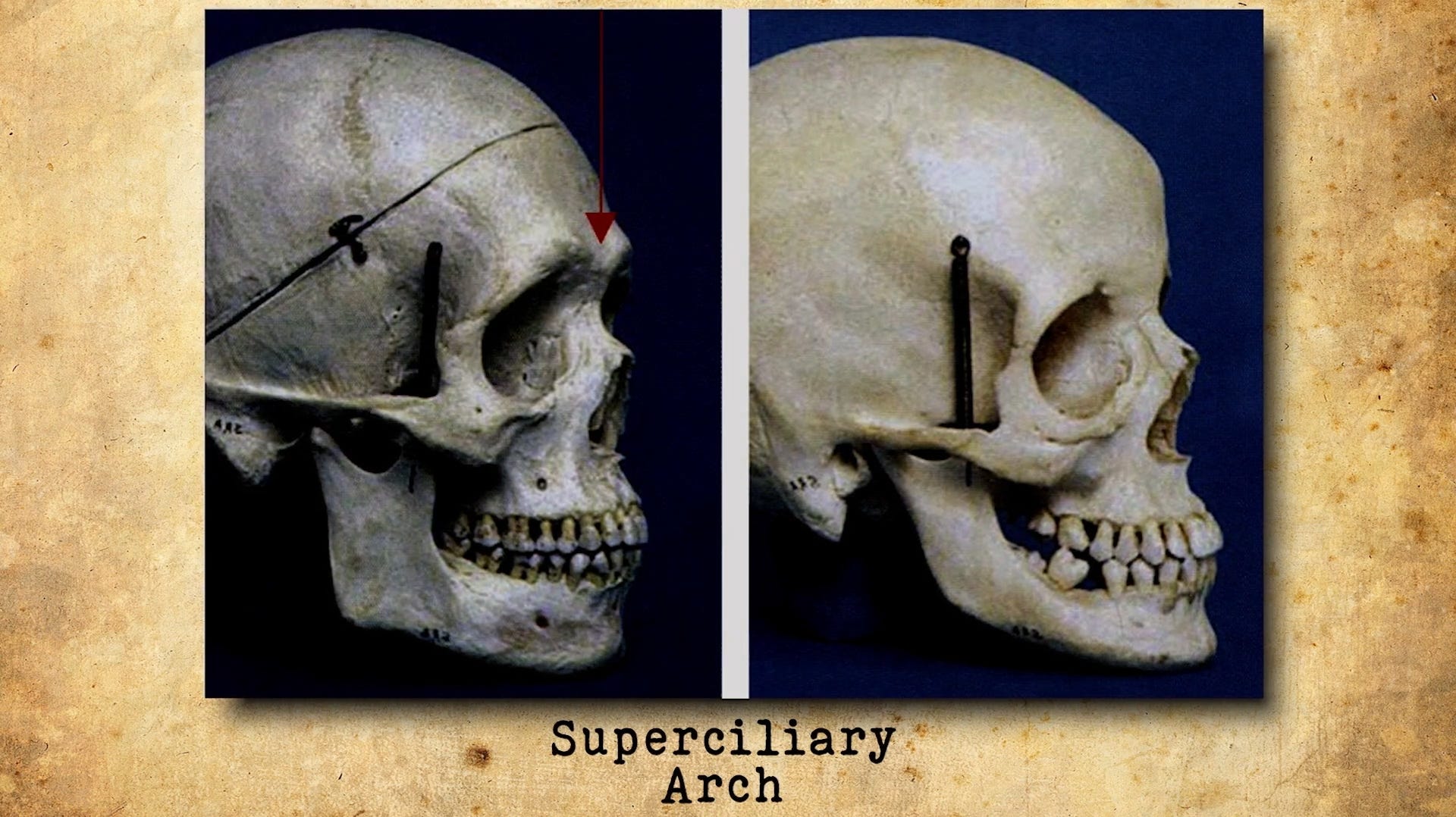
Then a red arrow appears on screen, pointing from the impostor Lucy’s profile directly to the male skull in the diagram. Not the female skull. The male skull — the one whose forehead slopes backward in the same direction as the forehead visible in the footage of the woman who appeared as Sister Lúcia after 1967.
The film does not narrate this moment. It does not need to. The arrow is the argument.
* * *
The Male Superciliary Arch
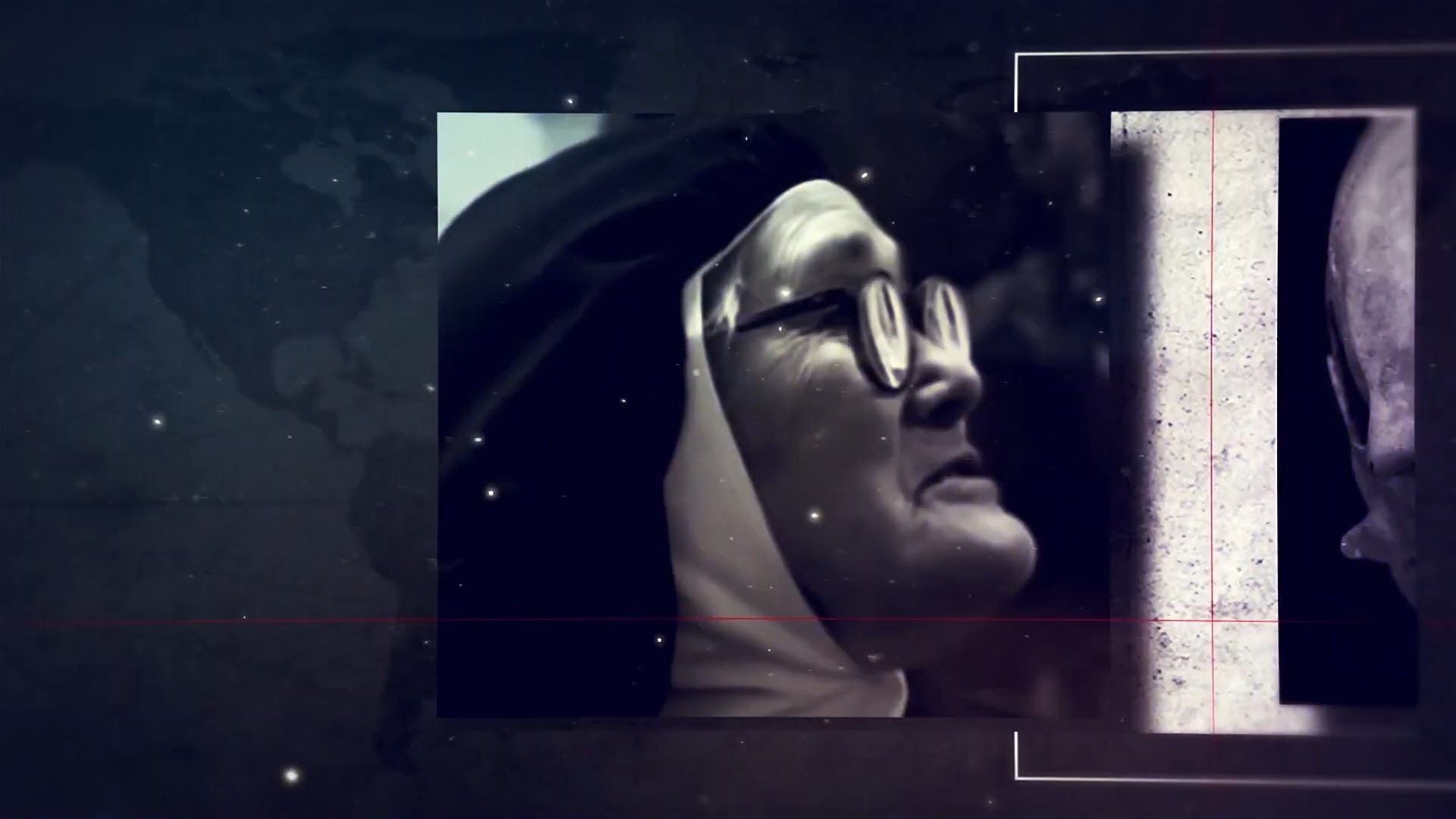
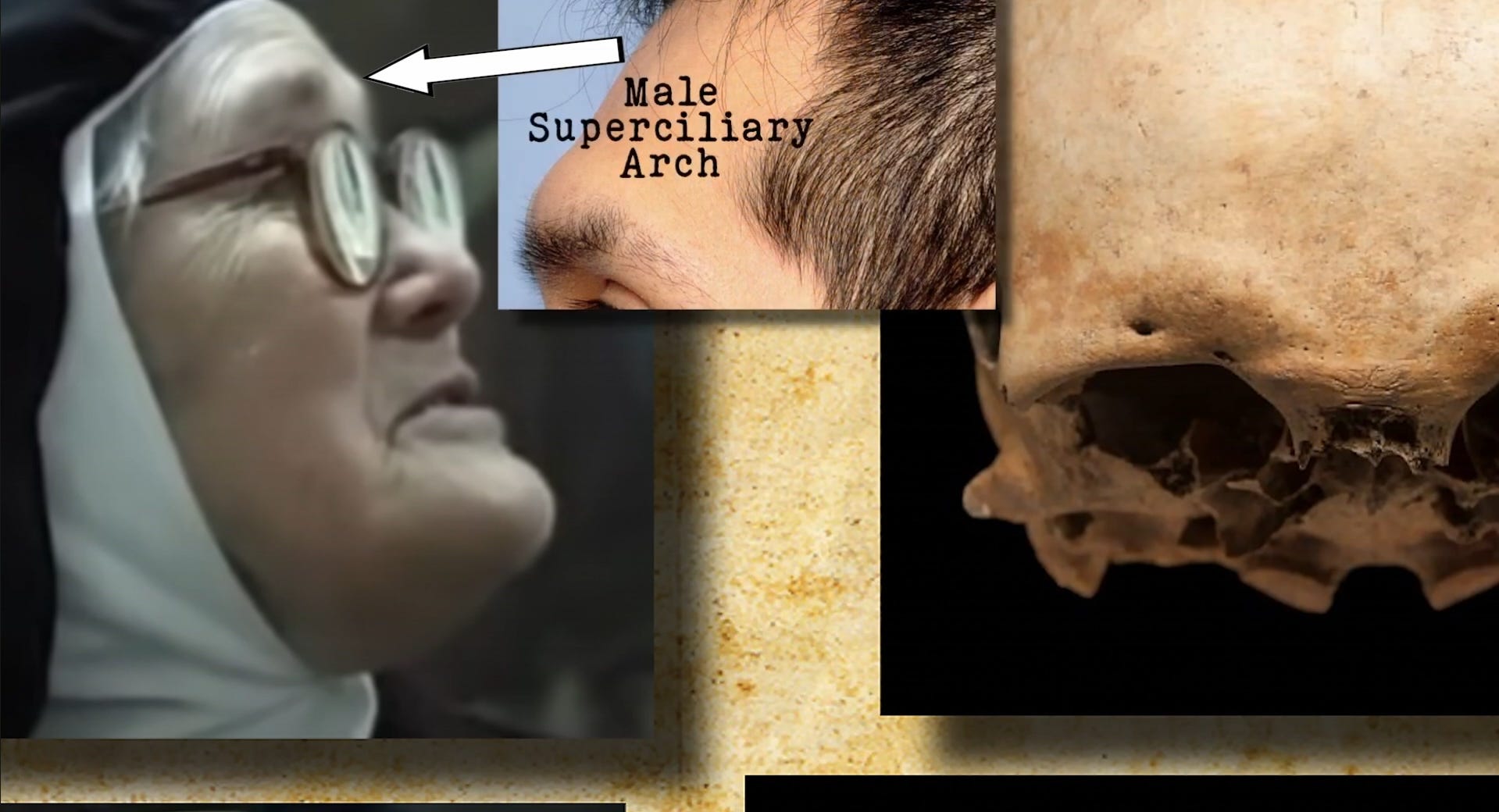
The central sequence of the film places three images alongside each other: the impostor Lucy in profile; a photograph of a male subject with his brow ridge labeled explicitly as “Male Superciliary Arch”; and skeletal reference material from anatomical sources. A white arrow in each frame points to the same landmark. The visual correspondence across all three is immediate and requires no explanation.
The narration at this point is spare: “The photo in the middle is a male showing his superciliary arch. Here we have the impostor Lucy, also known as Lucy 2, showing a very prominent superciliary arch.”
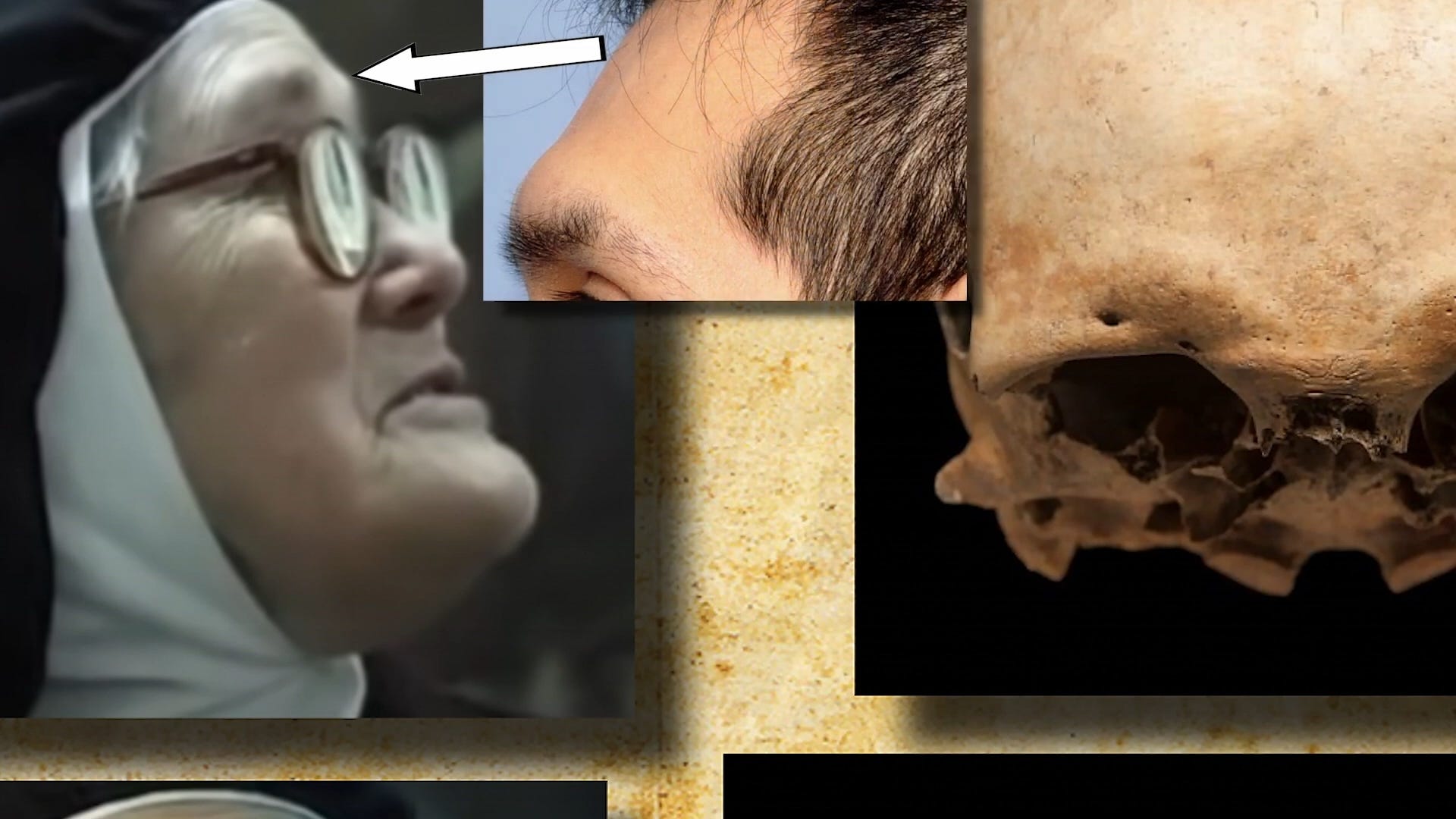
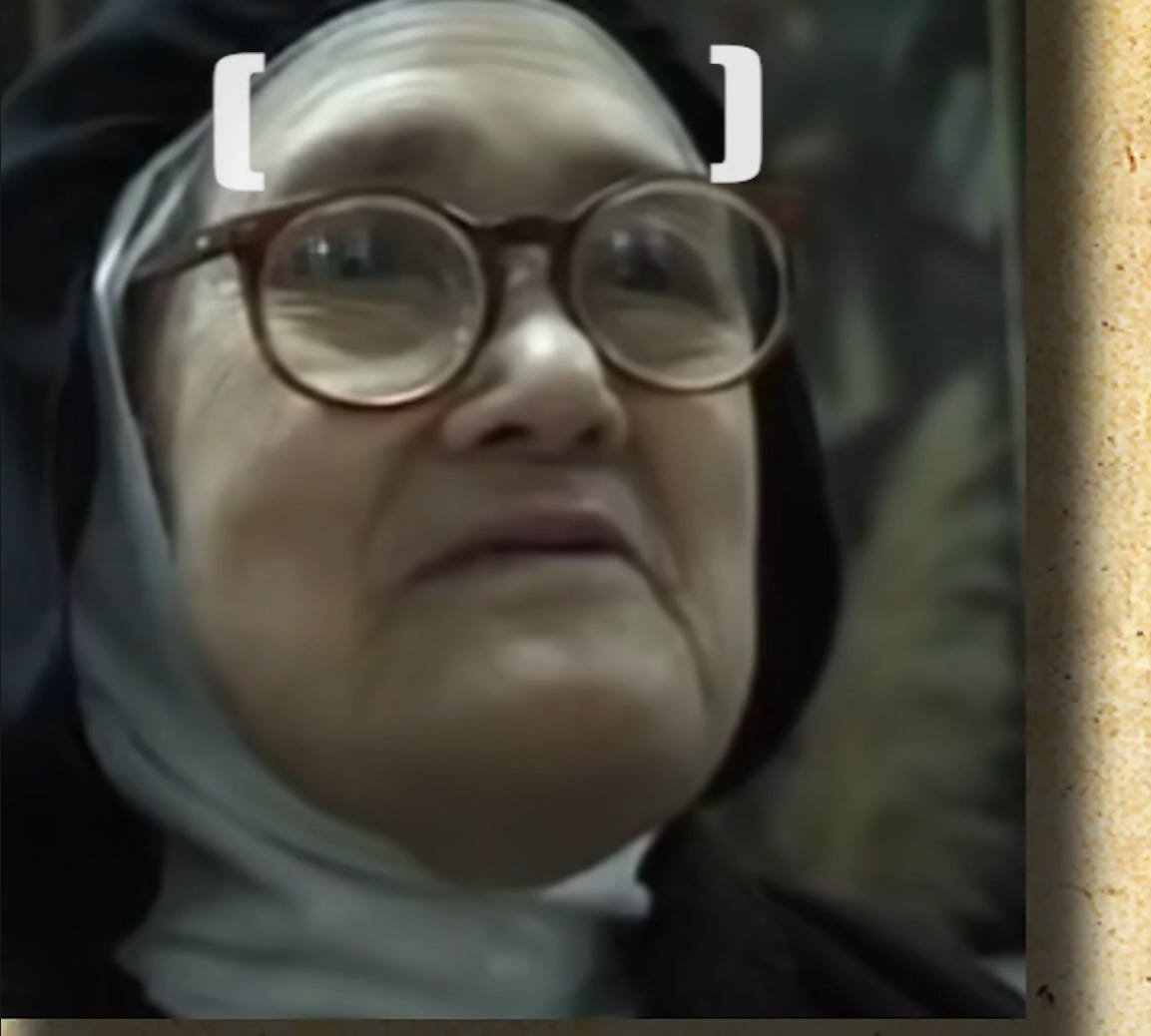
Additional photographs of the impostor Lucy follow — taken across different years, in different lighting, from different photographic sources. The brow ridge is present and pronounced in everyone. The sequence closes with a single statement: “All these pictures where the masculine superciliary arch are the impostor Lucy.”
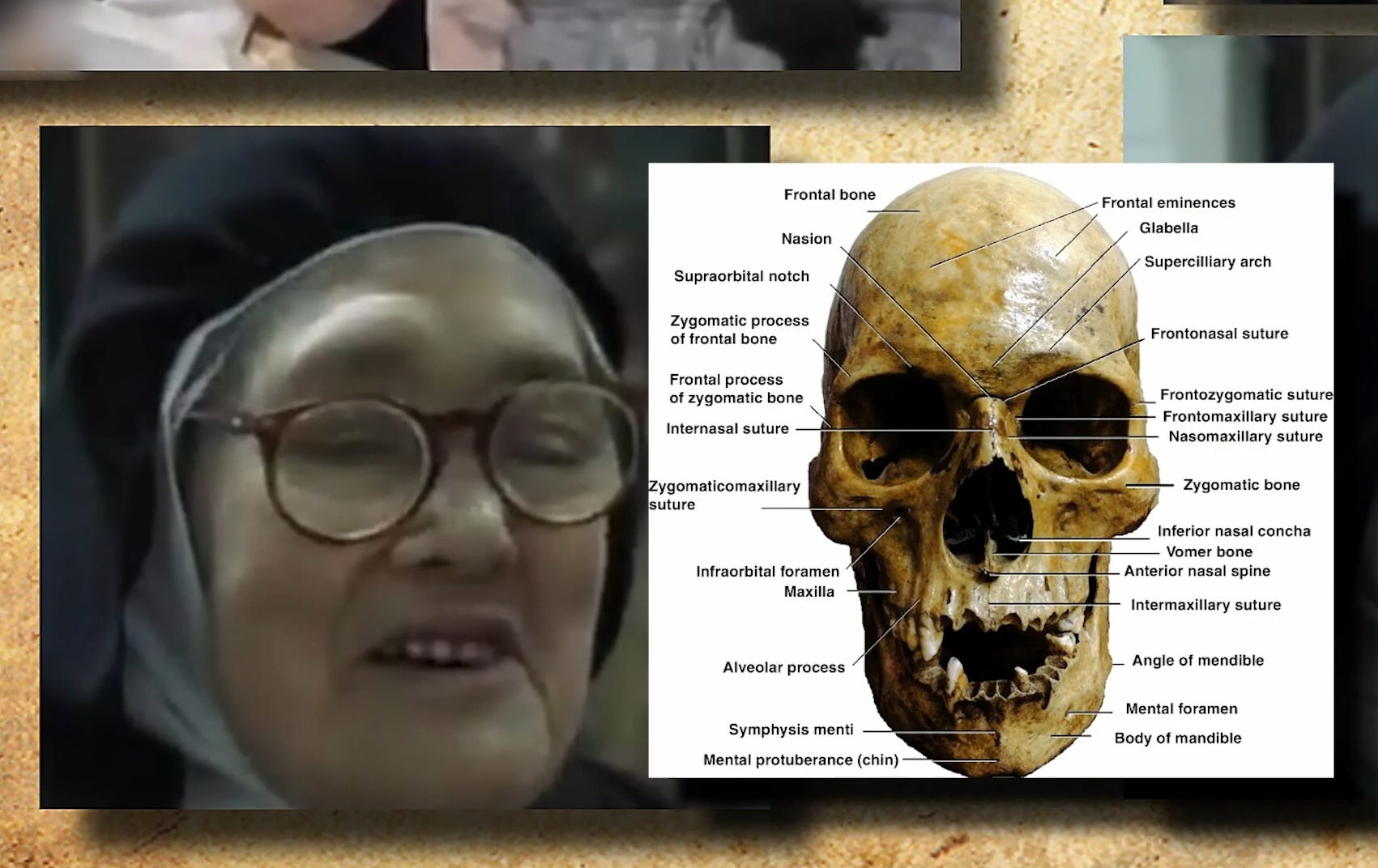
“This is not a forensic report. It is only an observation that anyone can see with the naked eye.”
— Sister Lucy Truth narration, The Bone That Cannot Lie
Lucy I and Lucy II — Side by Side
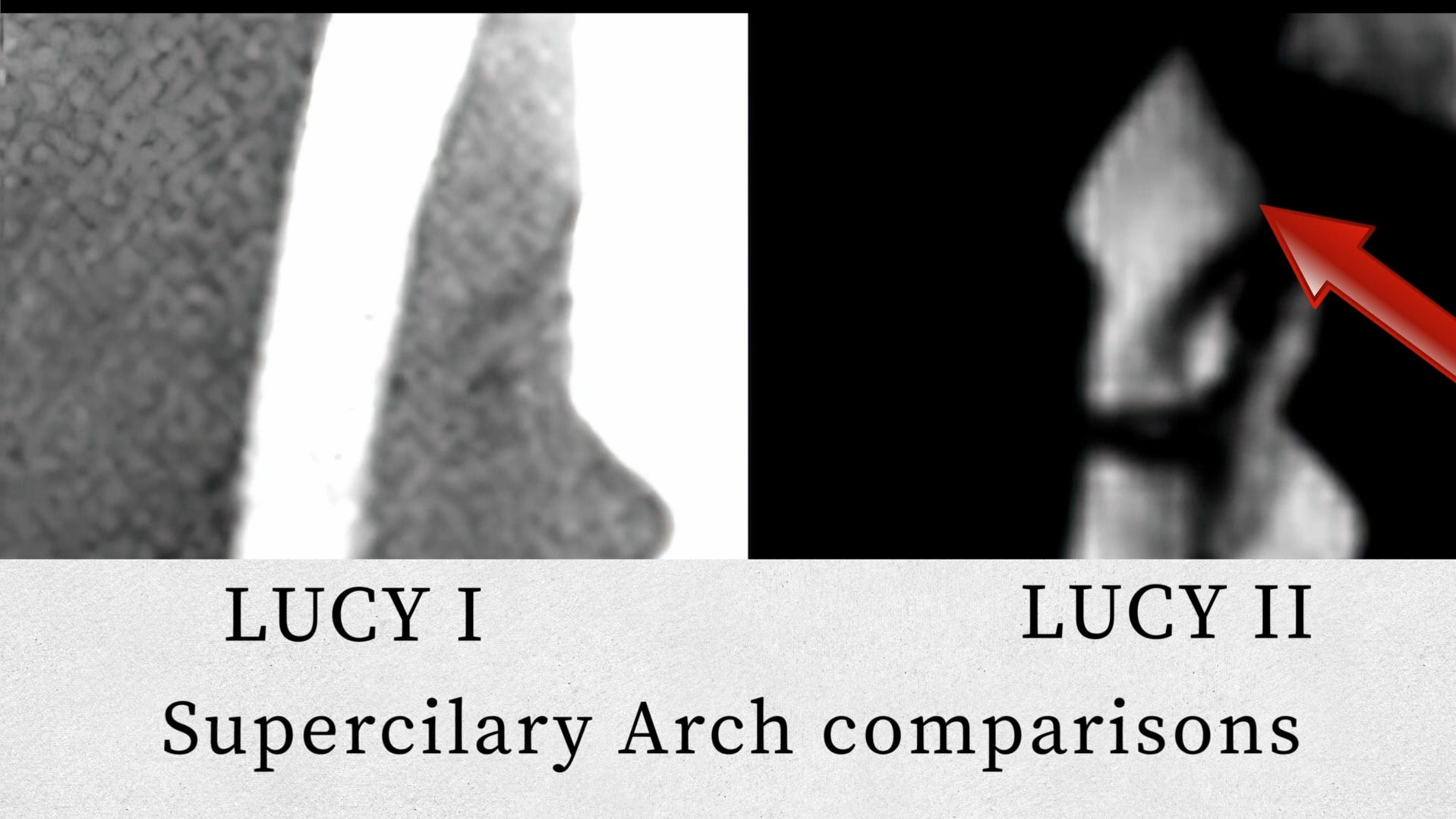
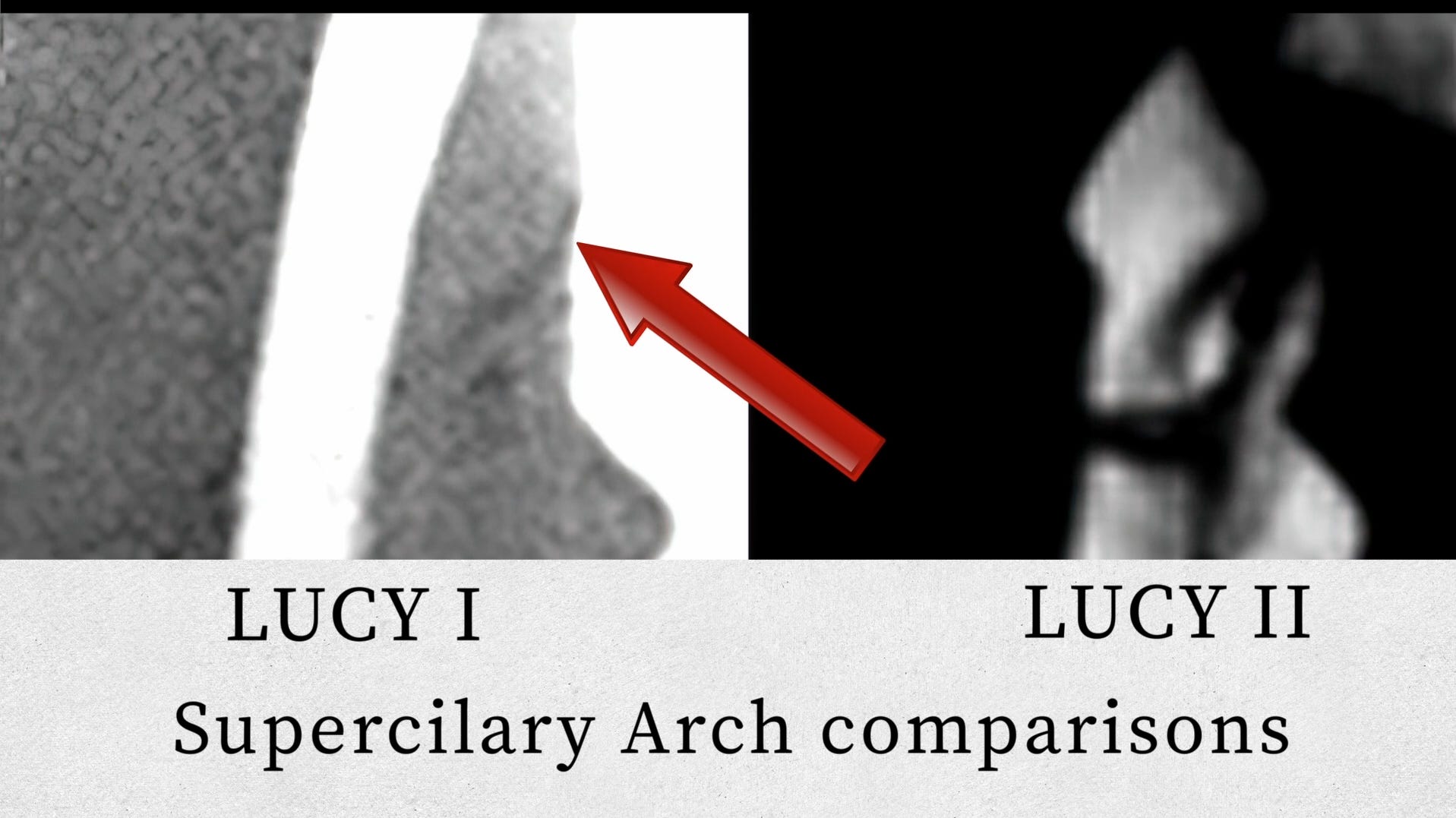
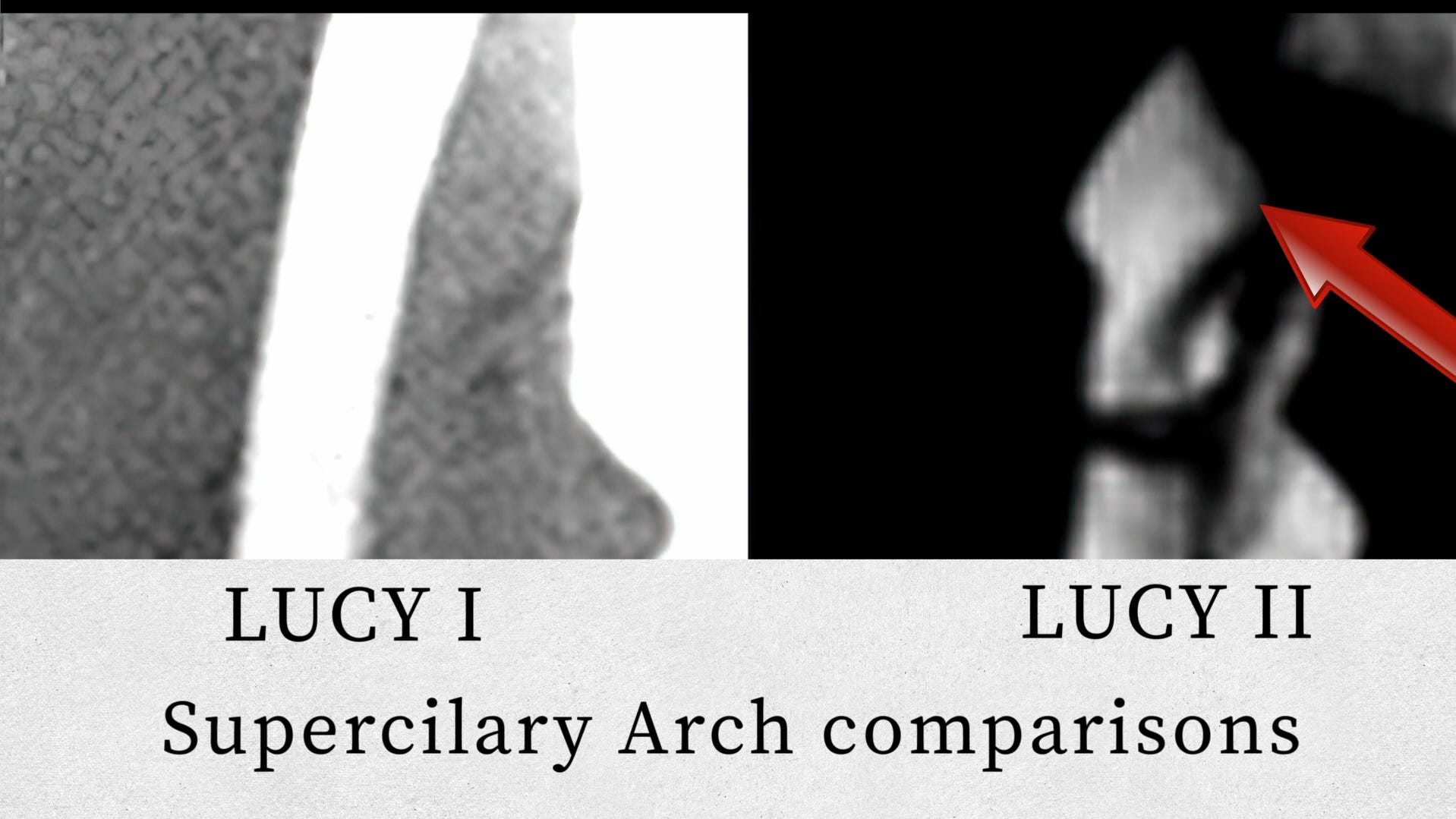
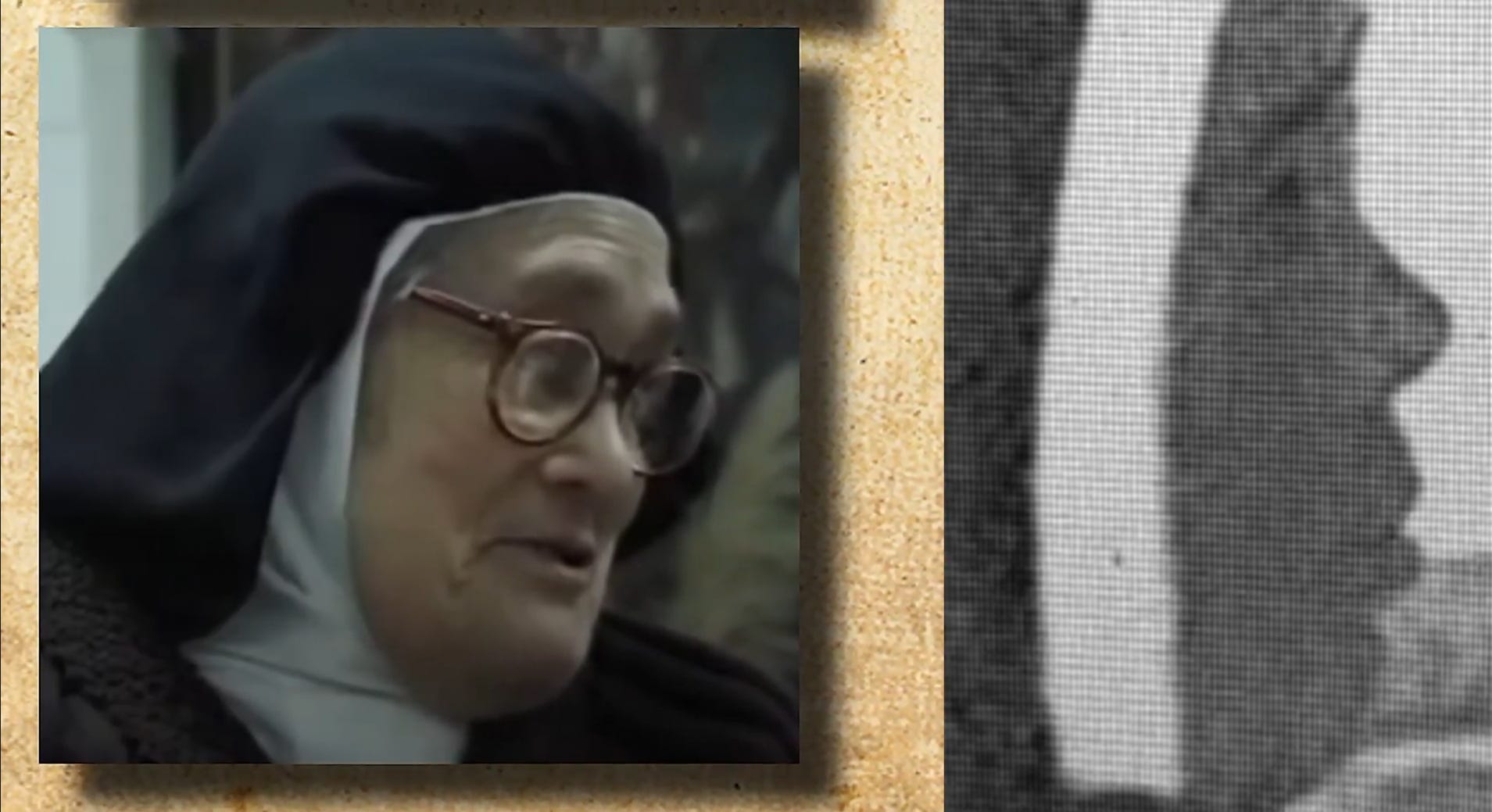
The film then does something that no amount of expert testimony can replicate. It places the two women — Lucy I and Lucy II — directly beside each other in profile. Not the whole face. The brow ridge alone, isolated, enlarged, stripped of any context that might soften the comparison.
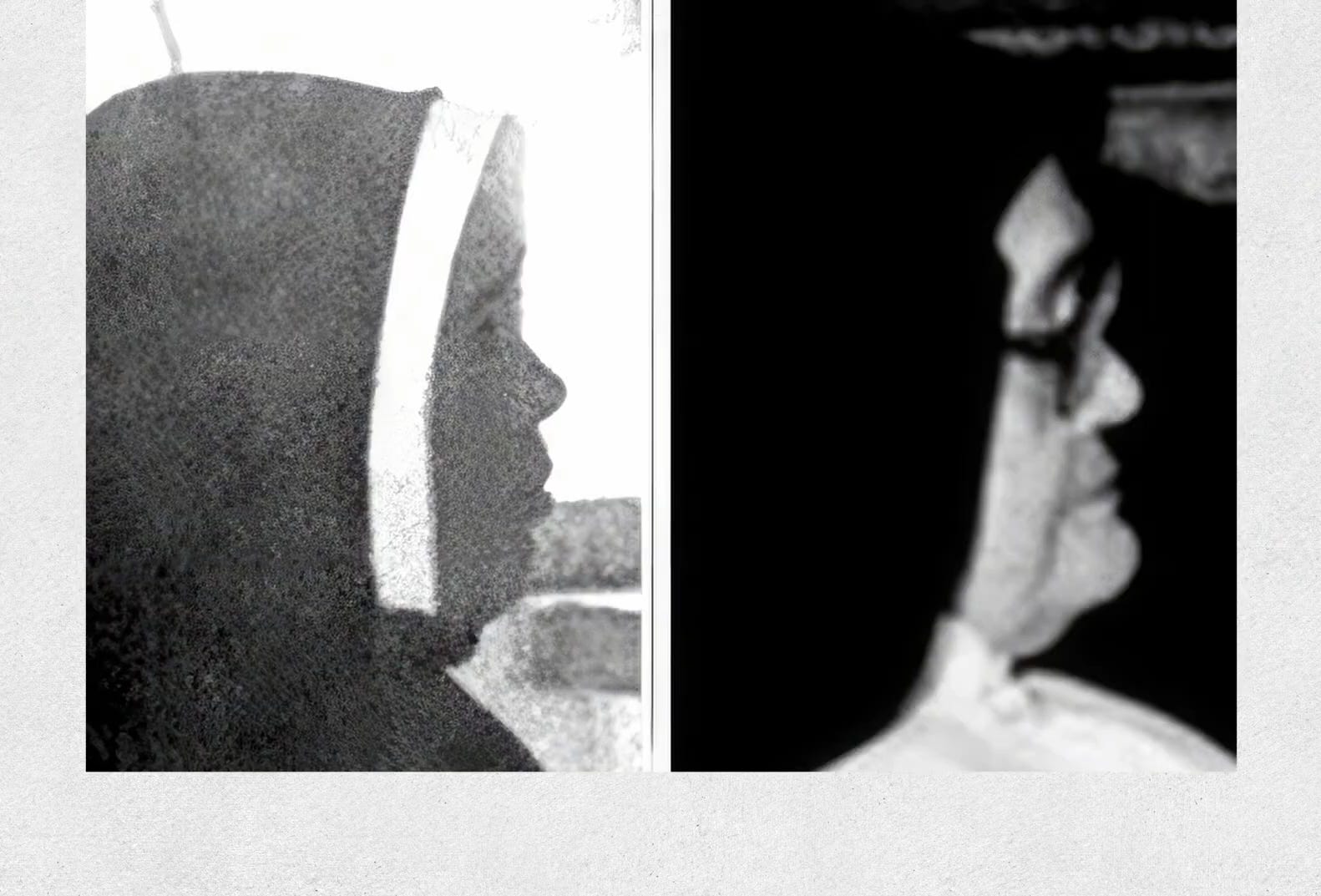
Lucy I’s forehead rises upright. Her brow ridge is flat and minimal, consistent with every photograph taken of the original Sister Lúcia before 1967 and consistent with normal female cranial morphology.
Lucy II’s forehead slopes backward. Her brow ridge projects forward as a pronounced shelf.
When you see a full face, the mind finds ways to reconcile differences. Different lighting. Different age and a different expression.
The close-up of the brow ridge alone does not. One ridge is flat. The other projects forward. Bone does not migrate. It does not grow new protrusions in a woman in her seventies and eighties. Whatever is present in those later photographs was there from the beginning of that woman’s life, which is the point the film is making.
* * *
The Second Bone That Does Not Lie
The chin tells the same story.
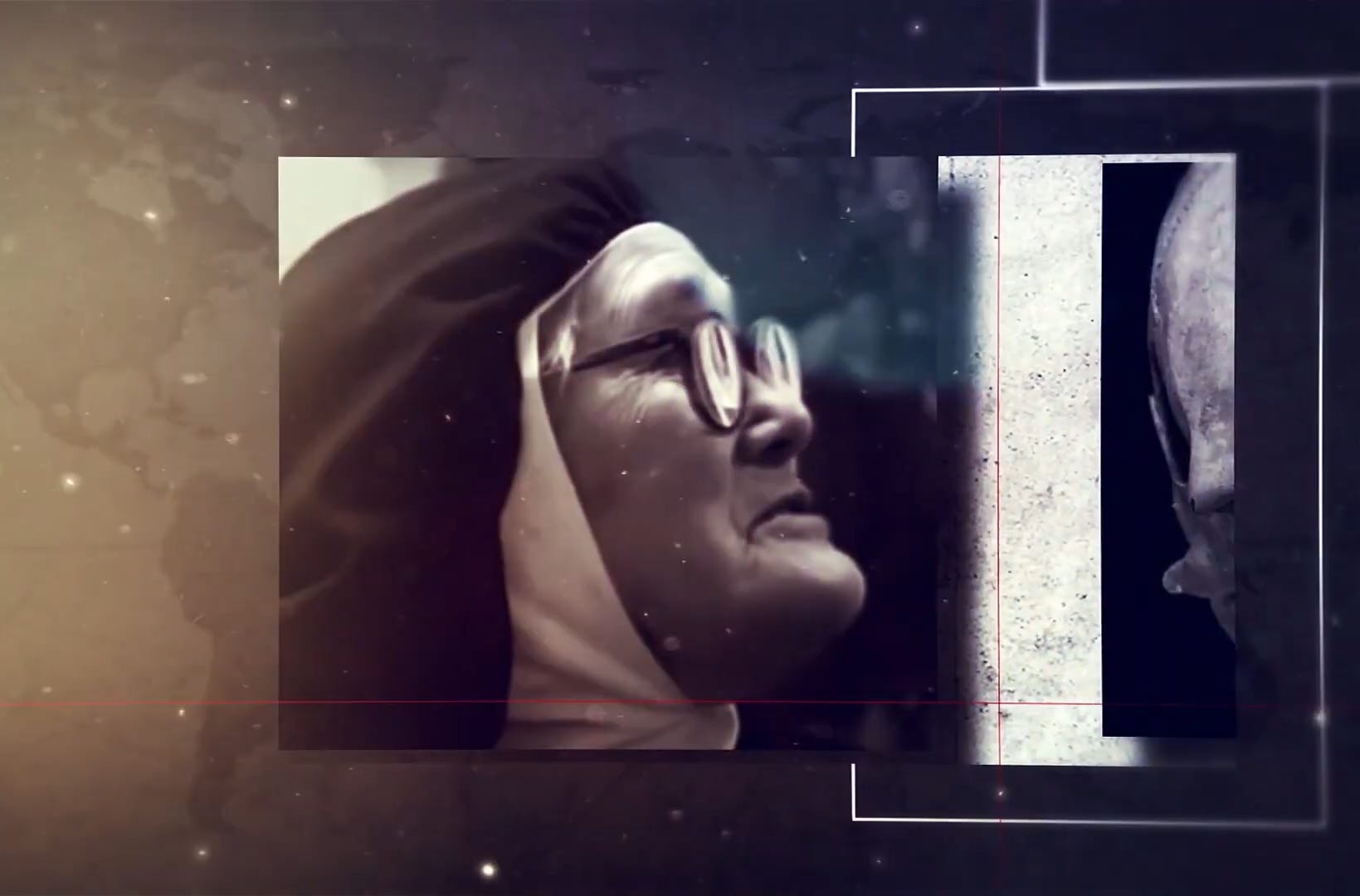
Dr. Julio Garcia, the board-certified plastic surgeon who produced one of Sister Lucy Truth’s first formal forensic reports, identified the chin as the single most definitive point of divergence between the two women. His conclusion was that the difference cannot be explained by aging and cannot be produced by any dental work. To create a chin like Lucy II’s from a chin like Lucy I’s, he wrote, would require breaking a bone.
Dr. Joseph Mascaro, an oral surgeon with forty years of experience repositioning human jaws, measured the jaw angle of both women and found a 32-degree difference. He then worked through every medical explanation available to him — aging, weight change, dental work, and surgical intervention. None of them accounted for what he measured. His conclusion: there is no good explanation.
The film simply shows the profiles side by side and lets the chin speak for itself. Lucy I’s profile shows a modest, relatively flat jaw consistent with every pre-1967 photograph of the original Sister Lúcia. Lucy II’s jaw projects forward dramatically — in a direction that aging alone cannot produce, and surgery would require breaking bone to create.
The bone does not negotiate. It does not change to fit the story.
What the Evidence Requires
Sister Lucy Truth has assembled a forensic record that now spans multiple disciplines and multiple countries. A statistical analysis by physicist Dr. Robert Bennett produced odds of one in seventeen sextillion that the two sets of photographs show the same person, equivalent to flipping a fair coin and getting heads seventy-four times in a row. Biometric specialists at Animetrics — the firm that identified the Boston Marathon bombers — reached the same conclusion. So did researchers at Michigan State University’s iPRoBe Lab. So did Lois Gibson, the forensic artist who holds the Guinness World Record for most criminal identifications in history, who produced age-progression drawings of what Lucia dos Santos would have looked like at sixty and eighty. Those drawings do not resemble the woman who appeared in her place.
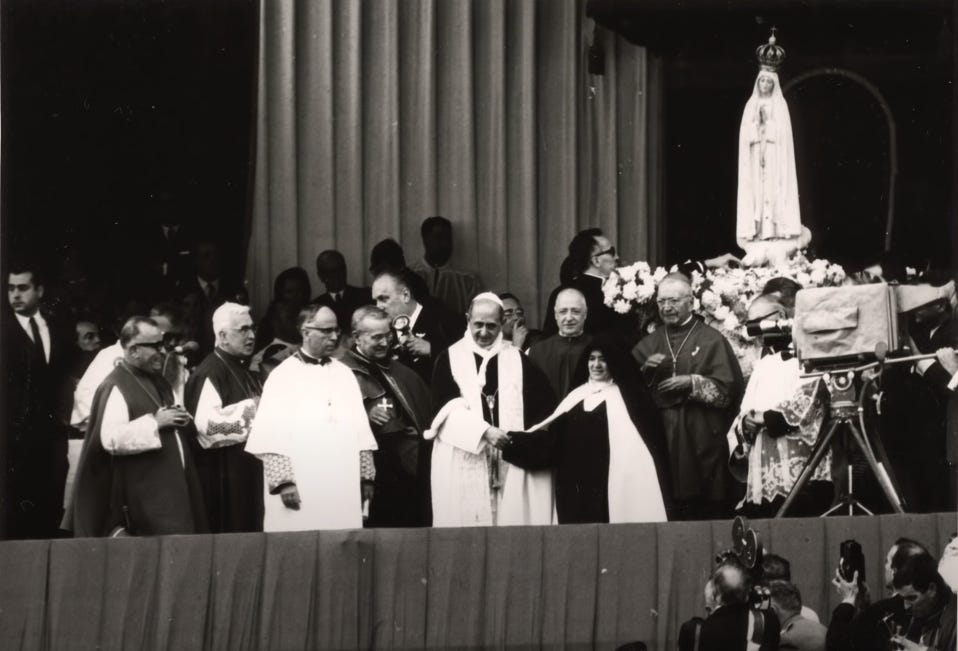
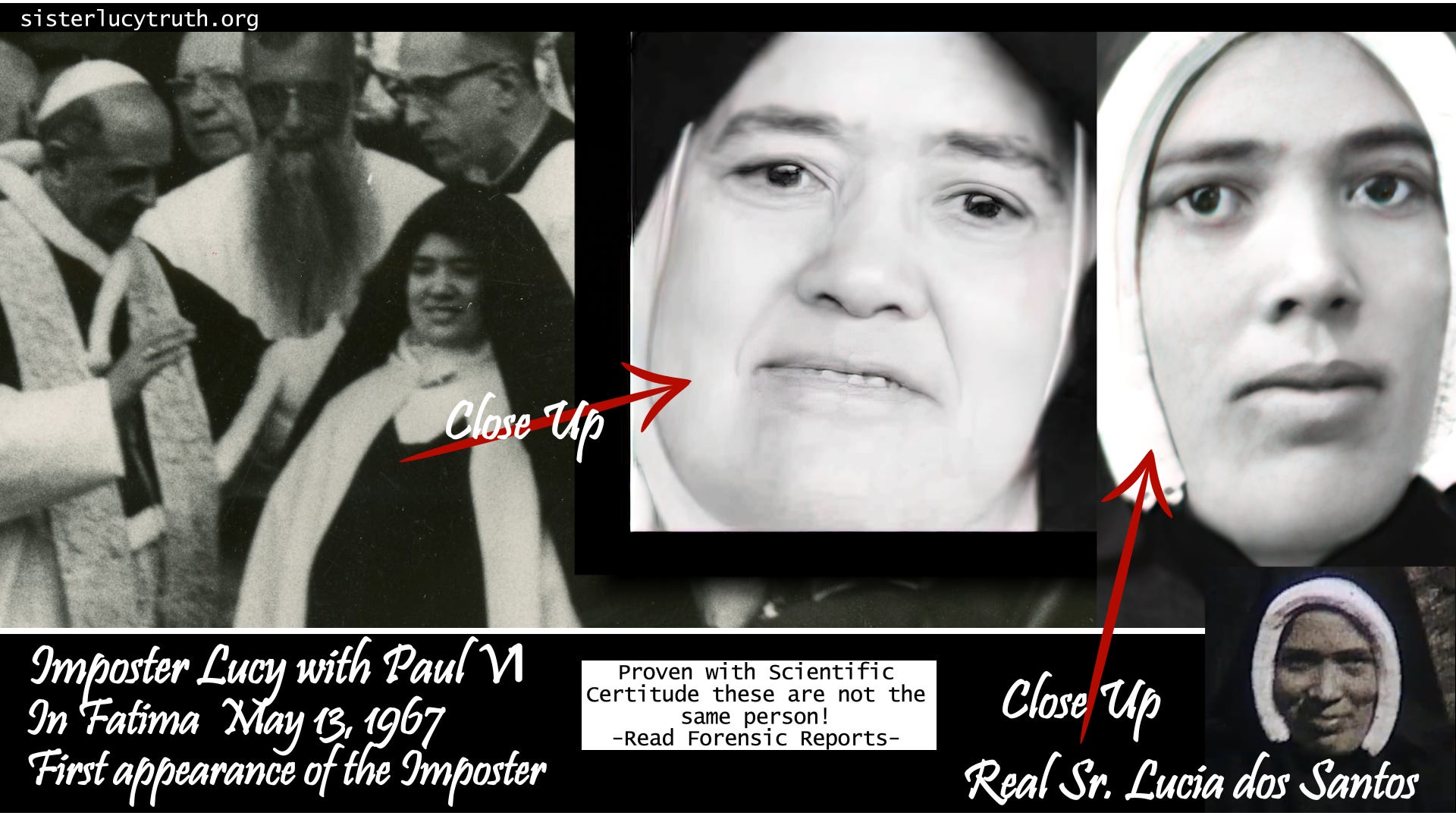
The Vatican has not responded to any of it. No counter-analysis. No statement addressing the chin, the brow ridge, the nose width, the facial ratios, the statistical findings, or the archival footage that shows a television camera occupying the exact space where the widely published photograph places Sister Lucy beside Paul VI in 1967. The silence has extended across years.
* * *
The real Lúcia dos Santos was a ten-year-old girl who stood in a muddy field in Portugal in October 1917 and watched, along with somewhere between fifty and a hundred thousand other people, as something happened in the sky that secular journalists, lawyers, and scientists described independently and consistently as inexplicable.
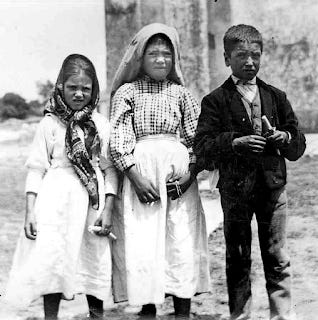
She was, by every documented measure, a real woman, with a documented face, documented teeth, and a chin that did not protrude.
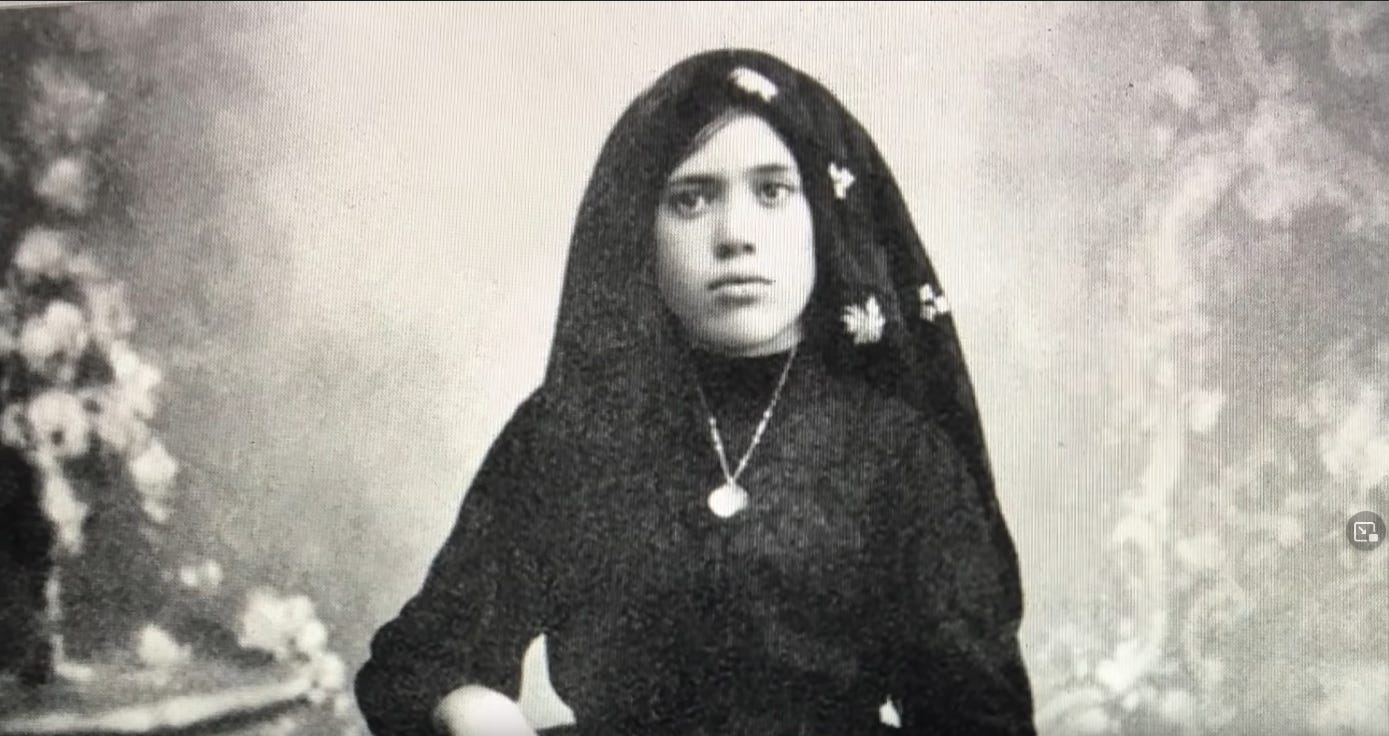
The Bone That Cannot Lie asks whether that is the same woman who appeared beside Paul VI in 1967, who lived in the Carmelite convent in Coimbra until her reported death in 2005, and whose face the world accepted without question for nearly four decades.
The experts have given their answer.
The film invites you to give yours.
Watch The Film · Full forensic reports: sisterlucytruth.com
The Bones That Cannot Lie: PDF Download